

Slow fashion is a movement that encompasses everything that fast fashion isn’t. It’s the attention to the carbon footprint we create when purchasing clothes while being aware of the process and resources used to make each piece of clothing in our wardrobes. Slow fashion motivates people to slow down consumption and look at outfits differently. It’s all about repairing your clothes, opting for second-hand pieces, donating, and responsibly disposing of your older garments.
Due to extremely low prices, new clothes are often seen as disposable. Consumers often buy clothes for a single occasion, never wearing them again. In the UK, 27% of Brits said that they judge people who wear an outfit more than once, with 12% of respondents saying that they only wear one once. Being an outfit repeater is in, though. Some of our tips to wear your clothes more are to mix different clothing pieces, invest in high-quality, sustainable accessories, and trade clothes with friends.
The problem with the fashion industry
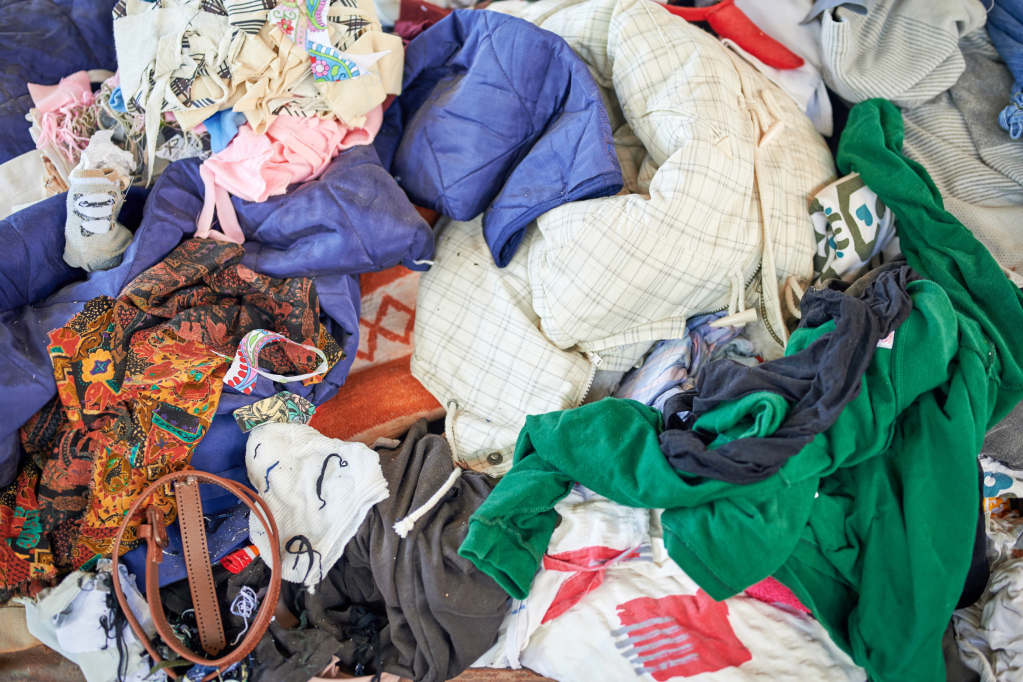
The fashion industry is the second largest polluter in the world, just after the oil industry. Clothing production creates untreated wastewater containing toxic substances, such as lead, mercury, and arsenic, dumped directly into the rivers. The industry emits around 10% of global greenhouse gas emissions, and if it continues at the same pace, the predicted greenhouse emissions will increase by more than 50% by 2030.
Cheap manufacturing and supply prices and the lack of strict environmental regulations make it possible for your favourite fast fashion items to be produced in developed countries. Therefore, they are forced to bear the burden of all environmental impacts of the fashion industry, while most clothing consumption is done in developed countries.
How can slow fashion help?
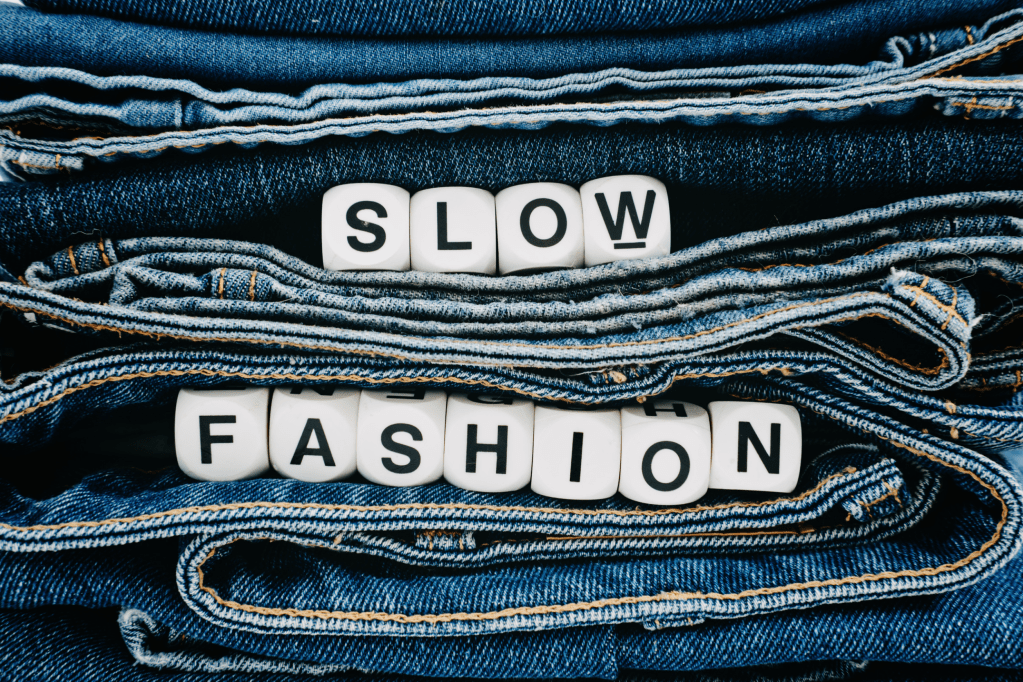
We consumers need to be aware of the negative impacts of the industry on our planet and demand change. Change starts with us when we purchase each fashion of clothing. Here are some of our easy tips to introduce slow fashion to your life:
- Research before buying and see your favourite brand’s commitment to sustainable fashion
- Be aware of greenwashing in the fashion industry
- Repair and upcycle clothing
- Donate what you no longer use to organisations that are transparent about where their donations go
- Only buy what you need! Limit your impulse buys and reduce your negative environmental impact
- Try renting or borrowing outfits for special occasions instead of always buying new clothes that won’t be reused
- Consider quality over quantity
- Take care of your current garments
- Buy second-hand clothing
- Opt for natural, recycled or semi-synthetic fibres
It’s time for the fashion industry to reinvent itself and grow towards becoming an ally of the climate and the industry as a whole. Foundations like Ellen MacArthur and the UN Alliance for Sustainable Fashion are two allies for brands working to commit to changing the path of fashion. Check them out for more information about the fashion industry’s impact on our planet, case studies on successful examples of circular economy and slow fashion principles.
 House Thirty
Leave a comment