
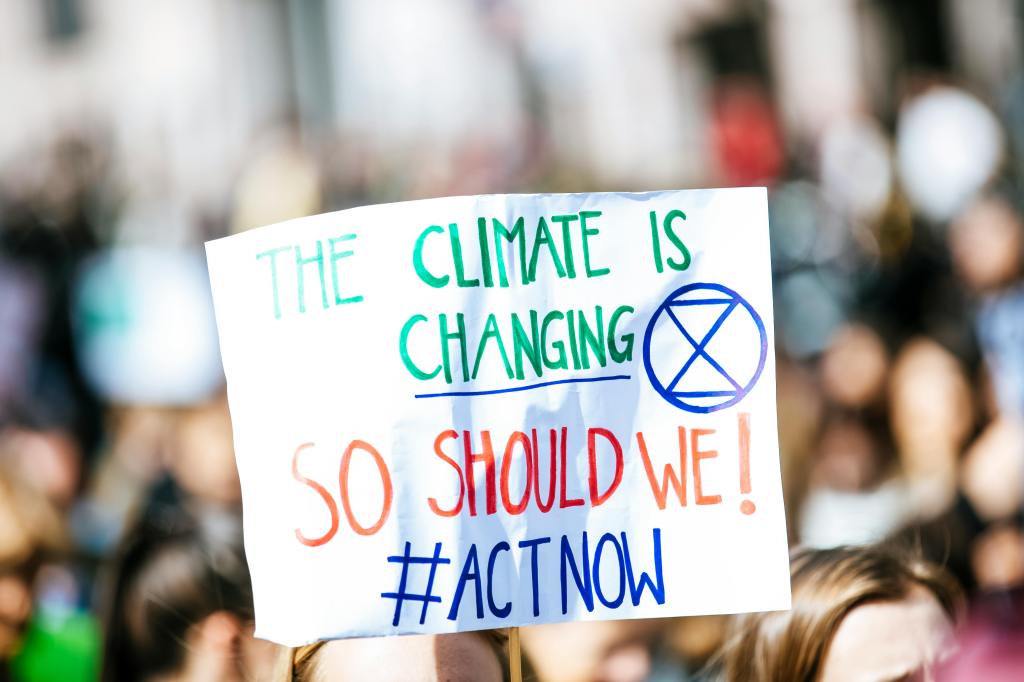
In an era when environmental sustainability is no longer an option but a necessity, the Zero Waste Movement has emerged as a critical solution to mitigating the current environmental crisis. This holistic approach to living requires us to shift our mindset about how we currently deal with and perceive waste management. The movement advocates a circular economy in its hierarchical principles and core values, where products and materials are meticulously designed, managed, and reutilised.
But apart from daily tips on living more sustainably following the movement, what does it mean to be zero waste? In this article, we’ll dig deeper into what it means to be zero waste and how to do so based on its guiding principles.
Zero Waste: Definition
Peer-reviewed by the Zero Waste International Alliance (ZWIA) and last updated in 2022, Zero waste is defined as “the conservation of all resources by means of responsible production, consumption, reuse, and recovery of products, packaging, and materials without burning and with no discharges to land, water, or air that threaten the environment or human health.”. The definition focuses on the guiding principles of zero waste and the goal that is strived for.
Living a Zero Waste life means, according to the ZWIA, designing and managing products and processes utilised to avoid and eliminate the volume and toxicity of waste and materials while conserving and recovering all resources – without burning or burying them.
The definition entails that the lifestyle’s goal is to guide people in an ethical, economical, efficient and visionary way in changing their lifestyles and practices to mimic sustainable natural cycles, where all discarded materials are designed to become resources for others to use.
But what is zero waste, really, in daily life?
Putting in practice zero waste aims to encourage a circular approach to the current way we utilise resources. It aspires to shift and take our waste management concepts further than sending waste to landfills, the ocean, or simply burning it. Zero waste also looks beyond simply recycling or managing waste consciously. It covers more than just how we deal with end-of-life waste. Still, it examines the entire lifecycle of the materials used and the final product to create a more sustainable and less wasteful production and consumption. Living a zero waste life is not only looking at the end goal. It’s about following values and guiding principles that eliminate waste in all chain stages, resulting in a closed-loop system; zero waste is not waste management but resource management and waste prevention.
Implementation: Infrastructure Change
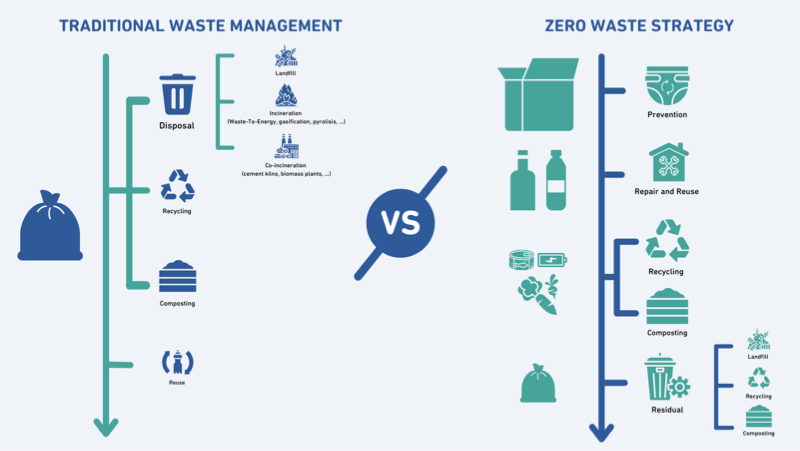
It is vital to reflect on our current production system and waste management infrastructure and redesign them with zero waste in focus. Respecting the different priorities that should be met to achieve this principle is crucial.
Waste prevention, such as designing long-lasting and repaired products, reducing packaging and redesigning those that cannot be composted, reused or recycled, and reusing parts and materials from discarded products, where the waste from a product becomes an input from another, maximising a product’s utility.
Separable waste collection and the reduction of residual waste are vital for implementing zero-waste practices. Practices such as fines for excessive waste generation could be implemented as a critical driver for behaviour change. They could also complement curbside waste collection with local reuse and recycling centres, encouraging citizens to recycle their waste correctly.
Zero Waste Hierarchy Principles
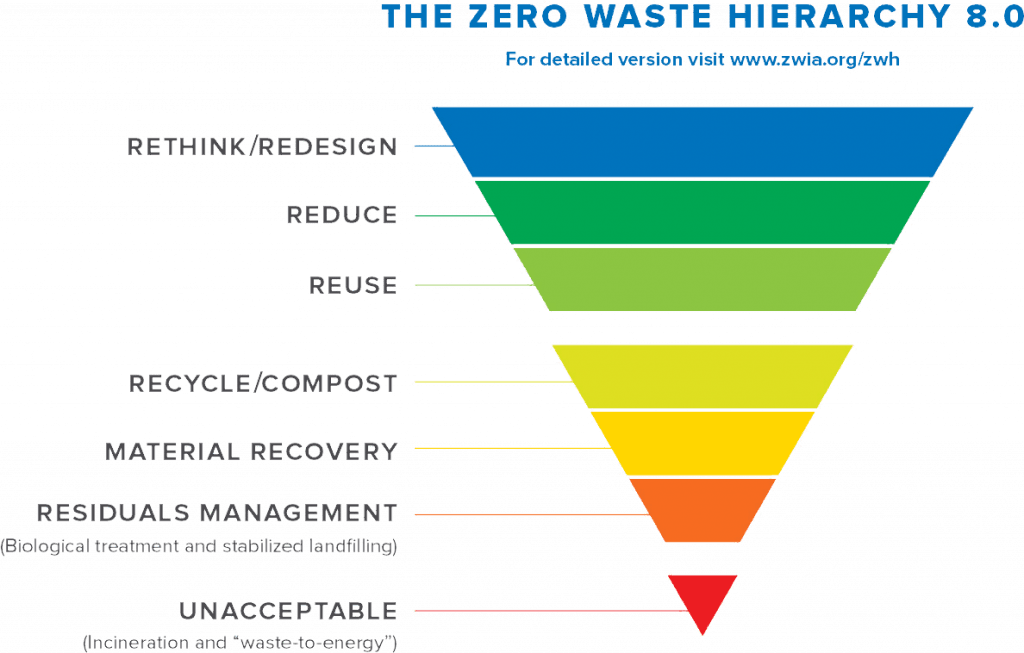
Rethink/ Redesign

It covers the systemic change to move towards a closed-loop model by redesigning products and systems to avoid unnecessary or wasteful consumption. Before purchasing, consider whether it’s necessary and reject unnecessary purchases or products and materials that cause problems for closed-loop systems. Incentivise the use of reused, recycled, or sustainably gathered non-toxic materials.
Reduce

Measures taken in daily life include reducing the quantity of resources, products, and packaging used and minimising the negative impacts on the environment and human health. Choose products that offer the possibility of maximising their usable lifespan while providing opportunities for continuous use. Plan your meals and purchase perishable products accordingly to avoid discarding food.
Reuse
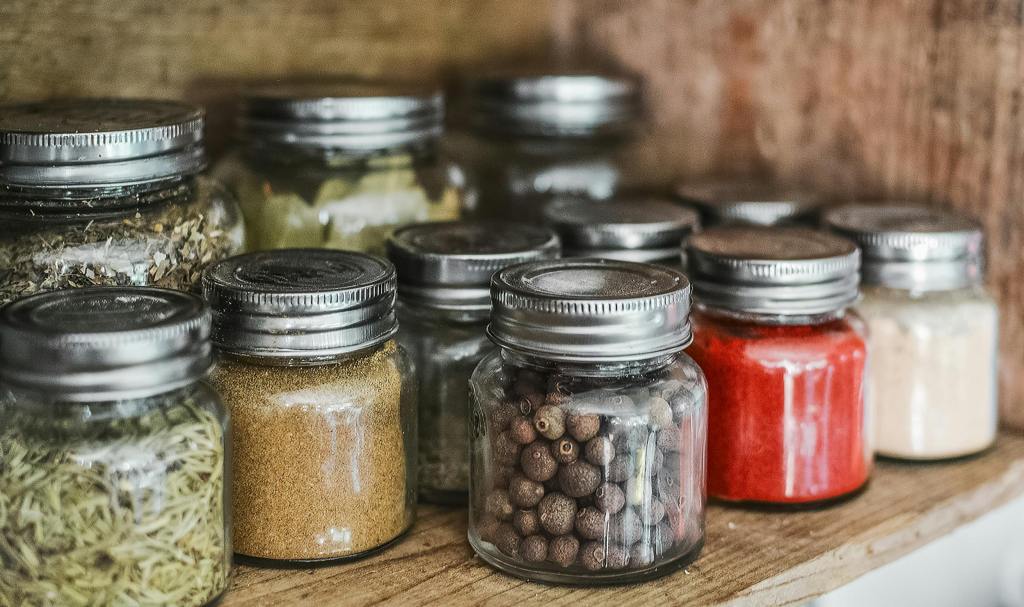
Reusing is utilising again products or materials for the same or similar as they were first designed. It is crucial in zero waste to reuse materials and products in ways that retain their value, usefulness, and function by maintaining, repairing or refurbishing them.
Recycle/Compost
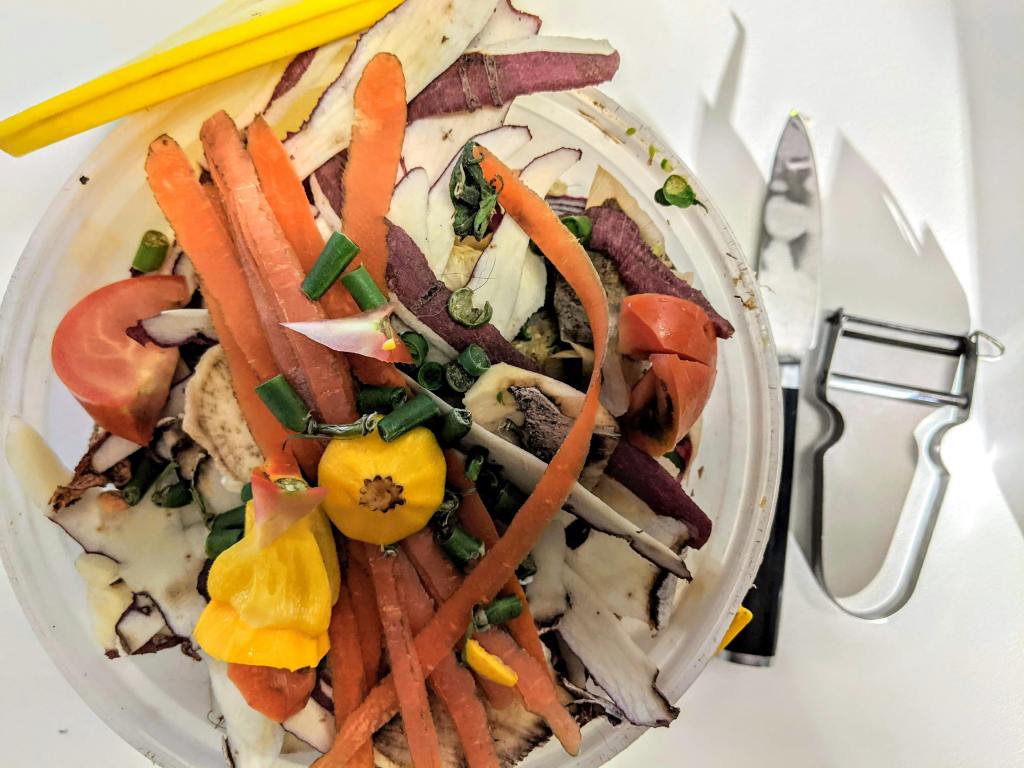
This stage focuses on reprocessing discarded materials or products into other formats that can be reused or returned to the soil to be composted. It supports and expands systems by keeping materials in their original product loop.
Material Recovery
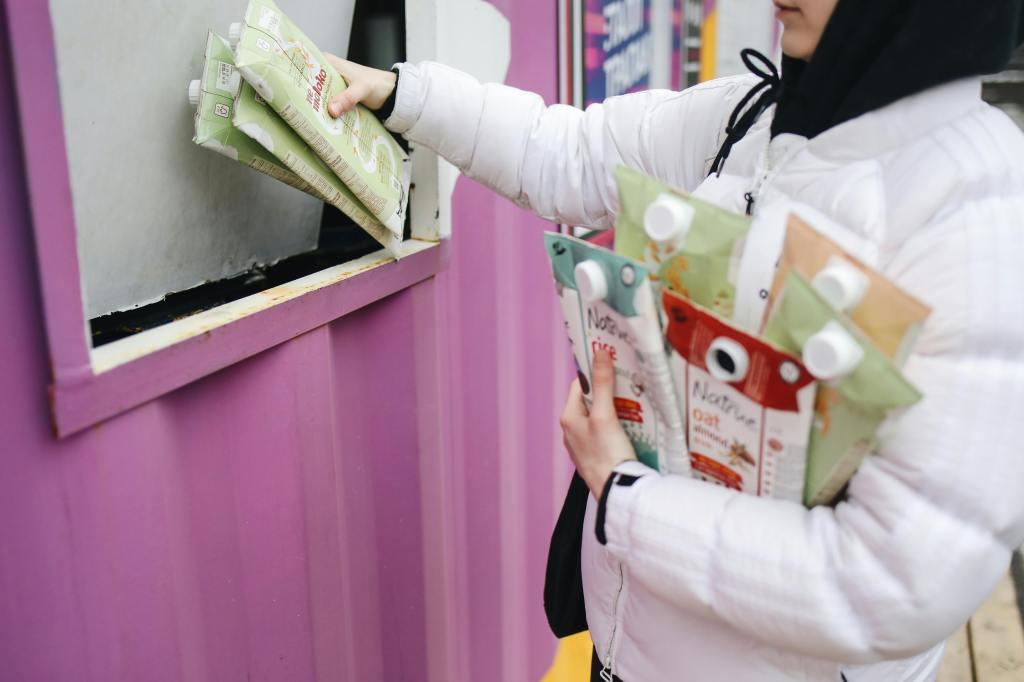
After the actions above, this phase encompasses all the salvaged materials, not including energy recovery and reprocessing into materials used as fuels or other means to generate energy, which are considered unacceptable practices.
Residuals Management

It covers handling discarded waste in ways that do not threaten the environment or human health. The remaining materials must be analysed to refine the systems to rethink, reduce, reuse, and recycle to prevent further discard. Systems and infrastructure must be adjusted as discards are recycled, their composition changes, and gas production and release must be minimised while the gas collection is maximised. It encourages the preservation of resources while minimising destructive disposal methods.
Unacceptable

This last hierarchical stage covers all systems and policies that encourage wasting or threaten the environment or human health. These include using chemical processing to turn discards into fuel, incineration of discards, and energy and destructive disposal systems dependent upon the continued production of discards.
Additional Resources
Zero Waste International Alliance
Toronto Environmental Alliance (TEA): Benefits of Zero Waste
United States Environmental Protection Agency (EPA): How Communities Have Defined Zero Waste

 House Thirty
Leave a reply to 3 Tips to Become a Recycling Pro – House Thirty Cancel reply